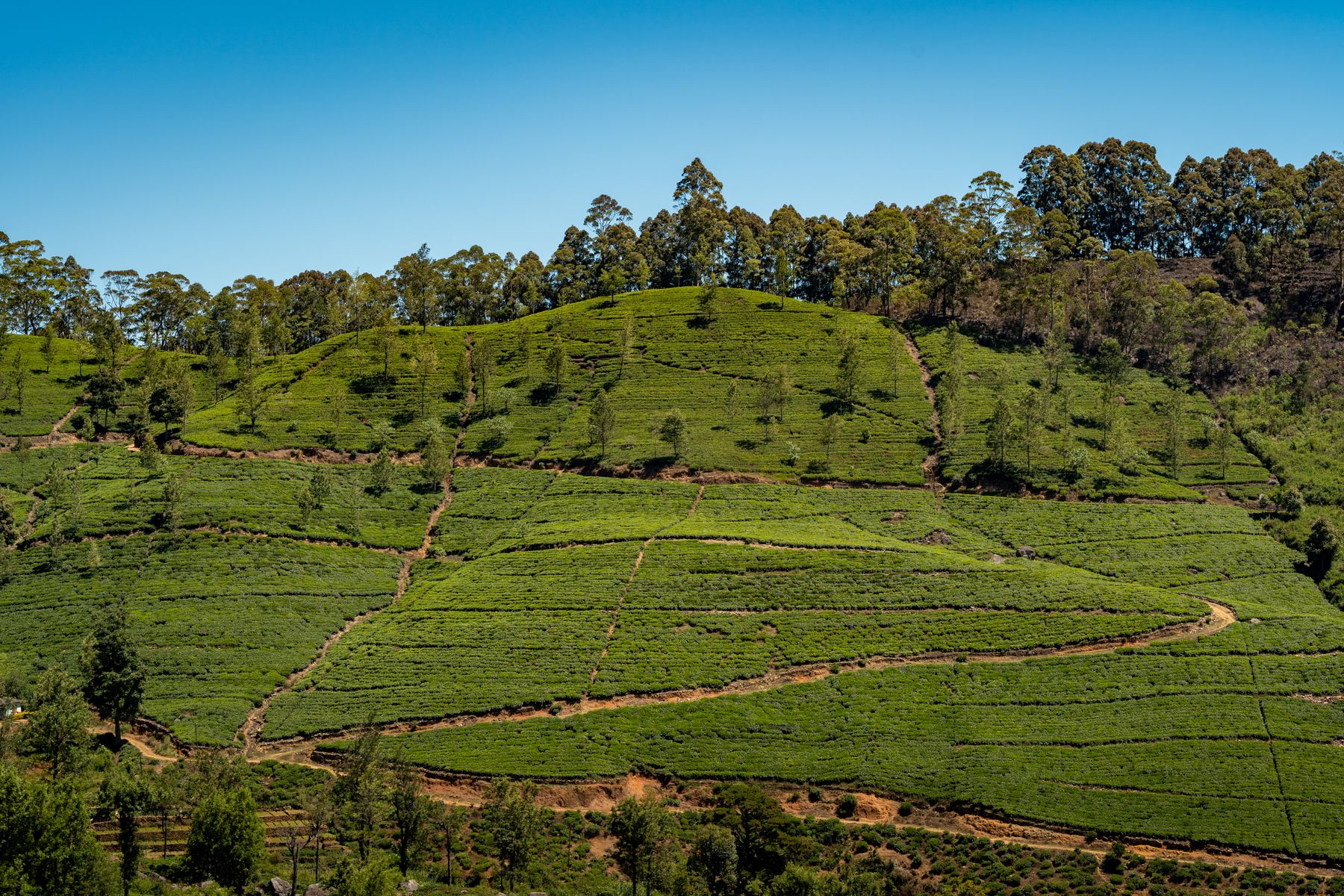
Sri Lanka’s seven tea-growing districts have distinct landscapes and regional tasting descriptions. Those profiles are useful starting points, but they do not guarantee that every tea from a district will taste the same.
Cultivar, harvest, processing, grade, storage, and brewing also affect the cup. Use regional notes as broad guidance, and rely on supplier records—not a general flavor description—for a particular tea’s origin.
Why Region Can Influence a Cup
Sri Lanka’s tea-growing districts differ in elevation, terrain, rainfall, and seasonal weather. The Sri Lanka Tea Board describes regional tasting profiles that help explain some of those differences.
A regional name is governed by origin and manufacturing requirements, and Ceylon tea may include blends from different Sri Lankan regions. A regional description alone does not establish where a particular brand or package was grown or made; product-specific origin claims need supporting supplier records.
The Seven Districts at a Glance
These elevations and tasting descriptions summarize the Tea Board’s district profiles. Estate conditions and individual teas vary, and the descriptions are not a ranking of quality.
- Nuwara Eliya — average elevation about 2,000 m; light golden cup and delicate fragrance.
- Dimbula — about 1,100–1,600 m; golden-orange and refreshingly mellow.
- Uva — about 1,000–1,600 m; mellow and smooth, with a distinctive aroma.
- Uda Pussellawa — about 950–1,600 m; often described as darker, stronger, and tangy.
- Kandy — about 650–1,300 m; bright copper color, strength, and body.
- Sabaragamuwa — sea level to about 610 m; dark yellow-brown, with a reported sweet-caramel aroma.
- Ruhuna — up to about 600 m; low-grown tea often described as full-flavored.
How the Districts Are Described
The Tea Board describes Nuwara Eliya as the highest district, with a pale golden infusion and delicate fragrance. Dimbula’s profile is mellow and golden-orange; its varied microclimates can produce different aromas. Uva is associated with a smooth cup and distinctive aroma.
Uda Pussellawa is often compared with nearby Nuwara Eliya, but the Tea Board describes it as darker, stronger, and tangier. Kandy is mid-grown and described as bright and coppery, with strength and body. Lower-grown Sabaragamuwa and Ruhuna are associated with darker or fuller-bodied black teas. These are regional tendencies, not a promise about every lot.
Compare Teas at Home
For a simple tasting, brew two teas side by side using each package’s directions. Keep the water, vessel, serving size, and steep time as consistent as the directions allow. Taste them plain first, then add milk or lemon if you normally drink tea that way.
There is no single best region for everyone. If you prefer a lighter cup, you might explore profiles such as Nuwara Eliya; for more body, compare the Tea Board’s descriptions of Kandy, Sabaragamuwa, and Ruhuna. Personal preference and the specific tea matter more than a broad label.